
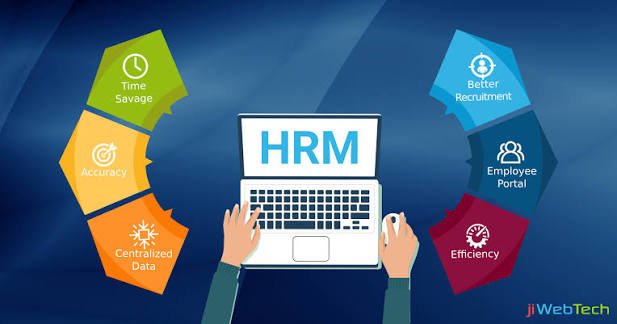
Managing human resources and employee compensation has historically been one of the most time-consuming and error-prone responsibilities for businesses of all sizes. In the past, human resource departments and finance teams relied heavily on manual spreadsheets, paper timecards, and painstaking calculations to determine monthly or bi-weekly earnings. Today, the landscape of workforce management has fundamentally shifted. Organizations are increasingly turning to advanced payroll software to streamline financial operations, eliminate human error, and ensure absolute compliance with changing labor laws.
Understanding how modern automated platforms handle complex financial equations and document production can help business owners appreciate the true value of digital transformation.
The Evolution of Workplace Compensation Management
For decades, processing worker compensation meant keeping track of physical hours, calculating overtime manually, deducting taxes based on dense government schedules, and printing physical checks or ledger entries. This traditional approach presented several significant challenges. A single misplaced decimal point or miscalculated tax bracket could lead to underpaid staff, frustrated employees, or severe penalties from regulatory authorities.
As businesses grew, these administrative bottlenecks scaled proportionally. Human resource professionals found themselves spending weeks out of every month buried in paperwork rather than focusing on strategic growth, talent retention, and employee engagement.
The introduction of dedicated payroll software revolutionized this paradigm. By centralizing employee data, attendance logs, and tax tables into a single unified platform, organizations can now execute entire pay cycles in a fraction of the time it once took. Automation ensures that repetitive, mathematical tasks are handled instantly and accurately, freeing up valuable resources for core business activities.
The Mechanics of Automated Salary Calculations
At the heart of any compensation management system lies a powerful calculation engine. When companies implement payroll software, the system relies on a continuous stream of interconnected data points to determine precisely what each employee has earned during a specific pay period.
Gathering Attendance and Time Data
The calculation process typically begins long before payday arrives. Modern systems integrate seamlessly with digital time-tracking tools, biometric scanners, and project management software. When employees clock in and out, the system automatically records their hours, late arrivals, early departures, and overtime shifts.
For salaried employees, the system recognizes standard contracted hours, while hourly workers have their compensation computed strictly based on verified timesheets.
Factoring in Overtime, Bonuses, and Commissions
No two paychecks are always identical, thanks to variable earnings such as overtime, performance bonuses, or sales commissions. Advanced payroll software applies pre-configured business rules and overtime multipliers automatically. For instance, if an hourly worker logs hours beyond the standard threshold, the platform applies the correct statutory overtime rate without requiring manual intervention from a finance officer. Similarly, sales figures or milestone bonuses can be uploaded in bulk, and the algorithm instantly incorporates these figures into the gross pay total.
Deductions, Taxes, and Contributions
Calculating gross earnings is only half the equation; the system must also determine net pay by applying mandatory and voluntary deductions. This includes federal, state, and local income taxes, social security contributions, health insurance premiums, retirement fund contributions, and garnishments.
State-of-the-art payroll software updates its tax tables automatically to reflect current legislative changes. When a pay run is initiated, the platform evaluates the employee’s tax withholding exemptions and calculates the exact deductions required by law, ensuring total compliance and minimizing financial liability for the employer.
Streamlining Payslip Generation and Distribution
Once all earnings and deductions have been accurately computed, the next critical phase is producing and delivering itemized statements of earnings to the workforce. Payslips serve as official financial records for employees, providing complete transparency regarding how their compensation was calculated.
Instant Template Population and Customization
In the manual era, generating individual statements involved printing thousands of paper forms or filling out rigid templates cell by cell. Modern payroll software automates this instantly. The moment a pay run is finalized, the system pulls data for each individual worker—including gross pay, itemized deductions, net pay, and year-to-date totals—and populates professional, branded payslip templates in seconds.
Employers can customize these documents to include company logos, statutory registration numbers, and custom messaging such as holiday greetings or performance notes.
Secure Digital Delivery and Employee Self-Service Portals
The shift from physical paper distribution to digital delivery represents one of the greatest leaps forward in modern workplace administration. Leading payroll software solutions feature integrated employee self-service portals. Instead of printing and distributing physical envelopes, organizations can publish digital payslips directly to secure employee accounts.
Workers can log into mobile applications or web dashboards at any time to view, download, or print their current and historical earnings statements. This self-service model drastically reduces administrative overhead, eliminates the risk of lost or misdelivered documents, and empowers employees with immediate access to their financial information. Furthermore, secure encryption protocols ensure that sensitive personal and financial data remains fully protected against unauthorized access.
Key Benefits of Adopting Automated Compensation Platforms
Investing in specialized payroll software yields profound advantages that extend far beyond simple time savings. Organizations that embrace digital automation consistently experience measurable improvements across several vital operational metrics.
Unmatched Accuracy and Reduced Risk
Human error is an inevitable byproduct of manual data entry and arithmetic. By letting algorithms handle complex multiplication, tax withholding formulas, and hour conversions, companies eliminate costly mistakes. Accurate calculations protect employee trust and shield the organization from costly compliance audits and regulatory fines.
Significant Time and Cost Savings
Processing compensation manually consumes hundreds of staff hours annually across human resources and accounting departments. Automating these workflows reduces pay run processing times from days or weeks down to mere minutes. This dramatic reduction in administrative drag translates directly into lower operational overhead costs.
Enhanced Compliance and Security
Tax laws and labor regulations are notoriously complex and subject to frequent updates. Reliable payroll software vendors constantly update their systems to align with evolving legal standards, ensuring that businesses remain compliant automatically. Additionally, cloud-based data storage safeguards sensitive compensation records against physical damage, loss, or theft.
Conclusion
The modern business environment demands efficiency, accuracy, and agility. Relying on outdated manual methods for worker compensation management exposes organizations to unnecessary risks, administrative delays, and heightened operational costs. By leveraging the power of dedicated payroll software, companies can completely automate the intricate mechanics of salary calculations and streamline the distribution of itemized statements.
This technological transition not only protects against human error and regulatory non-compliance but also frees human resource professionals to focus on what matters most: supporting, developing, and engaging their people. Embracing automated financial administration is no longer just a luxury for large enterprises; it is a fundamental necessity for any forward-thinking organization looking to thrive in a competitive marketplace.