
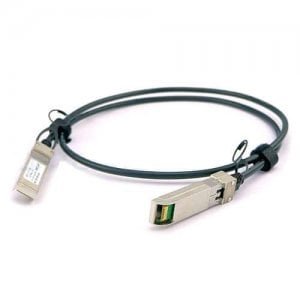
In today’s data-driven world, the demand for high-speed, reliable networking solutions is higher than ever. Data centers, cloud computing environments, and enterprise networks require connections that can handle massive amounts of data without latency or errors. One of the most essential components for achieving this level of performance is the QSFP28 cable. Known for its high-speed capabilities, QSFP28 cables are a critical part of modern networking infrastructures. This article explores the specifications, functionality, and practical use cases of QSFP28 cables, highlighting why they are indispensable for high-performance networks.
Understanding QSFP28 Cables
QSFP28 stands for Quad Small Form-Factor Pluggable 28, a standard that supports data rates up to 100 Gbps. This type of cable is an evolution of the QSFP+ interface, designed to meet the growing bandwidth demands of modern networks. QSFP28 cables are widely used in data centers, enterprise networks, and high-performance computing environments due to their speed, efficiency, and reliability.
The primary function of a QSFP28 cable is to transmit data between network devices such as switches, servers, and storage units. Unlike traditional copper or fiber cables, QSFP28 cables combine multiple channels into a single connector, allowing for faster transmission with minimal interference. Fiber-MART offers a comprehensive range of QSFP28 cables, including both direct attach copper (DAC) and active optical cable (AOC) types, ensuring that network architects can choose the best solution for their specific environment.
Specifications of QSFP28 Cables
Data Rate and Bandwidth
A key specification of a QSFP28 cable is its support for 100 Gbps data transfer rates. This is achieved through four independent