
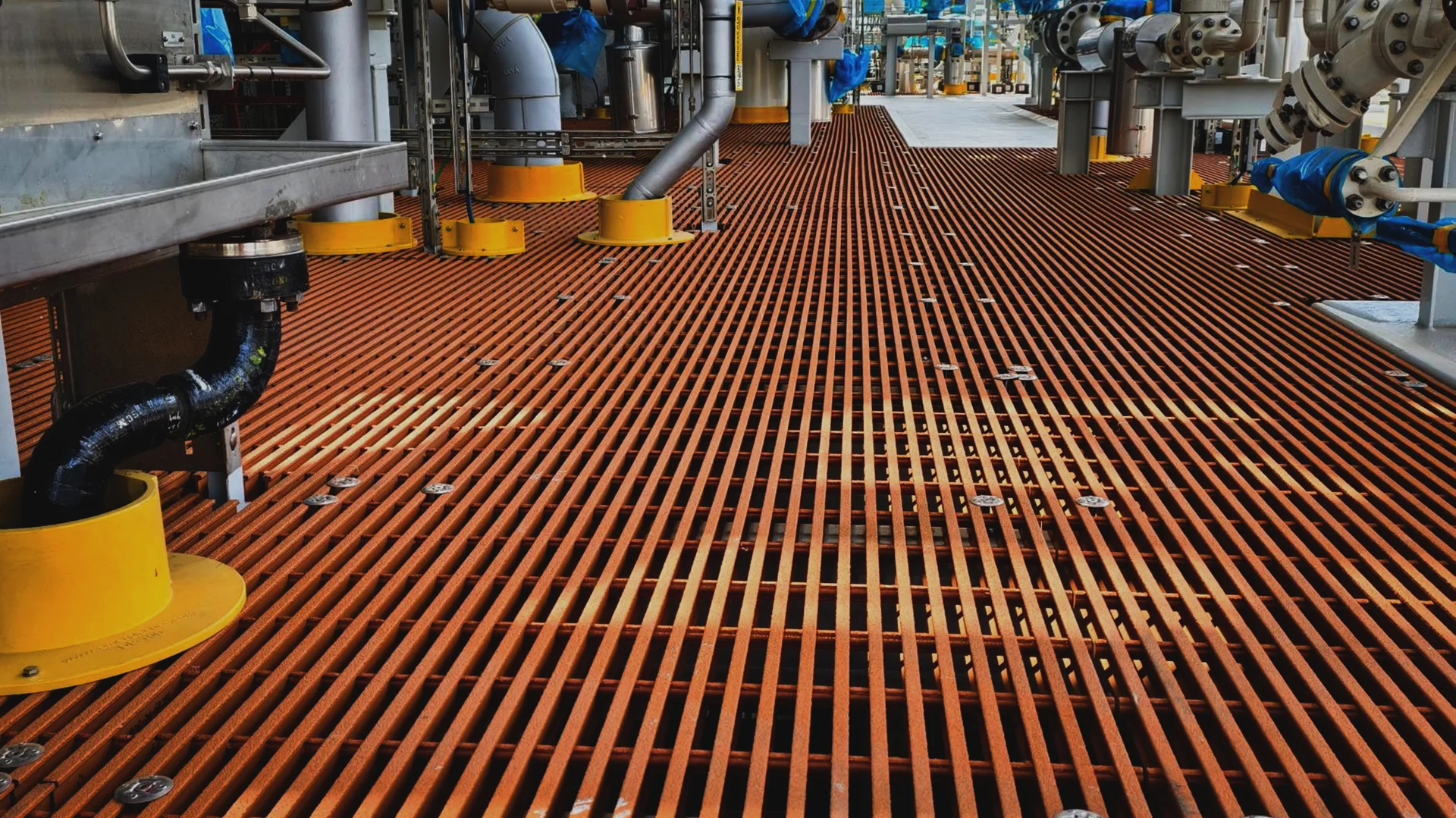
FRP grating, also known as Fiber Reinforced Plastic grating, has become a widely used material across industries such as construction, marine, chemical processing, oil and gas, and wastewater treatment. Its popularity is driven by its high strength-to-weight ratio, corrosion resistance, and long service life. A professional FRP Grating Manufacturer plays a crucial role in ensuring that these products meet strict safety standards while delivering long-term durability under harsh operating conditions. Unlike traditional steel or wood grating, FRP grating is designed to withstand aggressive environments where moisture, chemicals, and heavy loads are constant challenges.
Material Selection and Quality Control
One of the most critical factors in ensuring safety and durability is the selection of raw materials. A reliable FRP Grating Manufacturer carefully chooses high-quality fiberglass reinforcements and thermosetting resins such as polyester, vinyl ester, or epoxy. These materials determine the final strength, chemical resistance, and thermal stability of the grating.
Quality control begins at the raw material stage. Manufacturers conduct strict inspections to ensure that the fibers are free from impurities and that resins meet industry specifications. Any compromise at this stage can affect load-bearing capacity and lifespan. By maintaining strict material standards, manufacturers reduce the risk of structural failure and ensure consistent performance.
Advanced Manufacturing Processes
The production process plays a vital role in ensuring both safety and durability. Most modern FRP gratings are manufactured using processes such as molding or pultrusion. Each method has its own advantages, but both are designed to enhance structural integrity.
In the molding process, fiberglass layers are carefully placed in a mold and impregnated with resin. This ensures uniform distribution and strong bonding between materials. Pultrusion, on the other hand, involves pulling fibers through a resin bath and heated die, creating continuous and highly strong profiles.
A skilled FRP Grating Manufacturer uses precision-controlled equipment to maintain consistency in thickness, resin distribution, and curing temperature. This eliminates weak points and ensures that every panel can withstand heavy mechanical loads and environmental stress.
Structural Design for Load-Bearing Capacity
Safety in FRP grating heavily depends on its structural design. Engineers carefully calculate load distribution patterns to ensure that the grating can support both static and dynamic loads. Designs typically include square mesh, rectangular mesh, or customized configurations depending on application needs.
The depth of the grating, thickness of load-bearing bars, and spacing between cross rods are all optimized to enhance strength. Anti-slip surfaces are also incorporated to reduce workplace accidents, especially in wet or oily environments. A well-designed product from a reputable FRP Grating Manufacturer ensures compliance with international safety standards such as OSHA and ASTM.
Corrosion and Chemical Resistance
One of the key reasons industries prefer FRP grating is its resistance to corrosion. Unlike metal gratings that rust over time, FRP materials are non-corrosive and perform well in chemically aggressive environments such as chemical plants, offshore platforms, and wastewater treatment facilities.
Manufacturers enhance this property by selecting corrosion-resistant resins and applying protective surface coatings. This ensures that the grating maintains its structural integrity even when exposed to acids, alkalis, salts, and moisture for extended periods. As a result, maintenance costs are significantly reduced, and operational safety is improved.
UV Protection and Environmental Resistance
Outdoor applications require additional protection against ultraviolet (UV) radiation. Prolonged exposure to sunlight can degrade untreated composites, leading to surface cracking or discoloration. To address this, manufacturers incorporate UV inhibitors into the resin system or apply specialized coatings.
A professional FRP Grating Manufacturer ensures that the final product can withstand extreme weather conditions including high temperatures, freezing climates, and humidity. This makes FRP grating suitable for bridges, walkways, offshore decks, and industrial platforms exposed to environmental stress.
Rigorous Testing and Certification
Before reaching the market, FRP grating undergoes extensive testing to ensure safety and durability. These tests include load testing, fire resistance testing, slip resistance evaluation, and chemical exposure assessments. Manufacturers simulate real-world conditions to verify product performance.
Certified laboratories often evaluate whether the grating meets international standards such as ISO, ASTM, and EN specifications. A trusted FRP Grating Manufacturer ensures that every batch is tested and certified, providing customers with confidence in product reliability.
Fire Retardant Properties and Safety Compliance
Fire safety is another critical aspect in industrial environments. FRP grating can be manufactured with fire-retardant resins that reduce flame spread and smoke generation. This is particularly important in oil refineries, power plants, and confined industrial spaces.
Manufacturers carefully balance fire resistance with mechanical strength, ensuring that the material does not compromise under high temperatures. Compliance with fire safety regulations is essential, and reputable manufacturers invest in advanced resin formulations to meet these requirements.
Installation Practices and Long-Term Performance
Even the best materials can fail if installed incorrectly. That is why manufacturers provide detailed installation guidelines to ensure proper fitting and alignment. FRP grating is lightweight compared to steel, making it easier to install without heavy machinery, but precision is still required.
Proper support spacing, fastening methods, and edge sealing are essential for long-term durability. A professional FRP Grating Manufacturer often offers technical support to ensure that installation follows best practices, reducing the risk of premature wear or structural issues.
Maintenance and Lifecycle Benefits
One of the biggest advantages of FRP grating is its low maintenance requirement. Unlike metal systems that require regular painting or anti-corrosion treatments, FRP grating retains its properties with minimal upkeep.
Manufacturers design products to resist wear, impact, and environmental degradation over long periods. This results in lower lifecycle costs and improved operational efficiency for industries. The durability of FRP grating directly translates into fewer replacements and reduced downtime.
Innovation and Continuous Improvement
The FRP industry is constantly evolving, with manufacturers investing in research and development to improve product performance. Innovations include hybrid composites, enhanced resin systems, and improved load distribution designs.
A leading FRP Grating Manufacturer continuously upgrades its production techniques to meet changing industry demands. This includes developing lighter yet stronger materials, improving fire resistance, and enhancing environmental sustainability. These advancements ensure that FRP grating remains a reliable solution for modern infrastructure challenges.
Conclusion
Safety and durability are the foundation of FRP grating applications across industries. Through careful material selection, advanced manufacturing processes, strict quality control, and continuous innovation, a professional FRP Grating Manufacturer ensures that each product meets the highest standards of performance. With excellent resistance to corrosion, fire, UV exposure, and heavy loads, FRP grating has proven itself as a long-lasting and cost-effective solution for demanding environments. Its combination of strength, safety, and low maintenance makes it an essential material for modern industrial and infrastructure projects.